Training resources
Patient information resourcesOnline and in person training to improve the availability of Knowledge and Library Services' resources to patients and the public.
A practical guide for searching the NHS website
This guide, developed by the Knowledge for Healthcare Patient and Public Information Group, takes users through the resources and services available through the NHS website and how to access them.
It may be particularly useful in sessions with healthcare staff providing health information to patients, or during training sessions with public library staff.
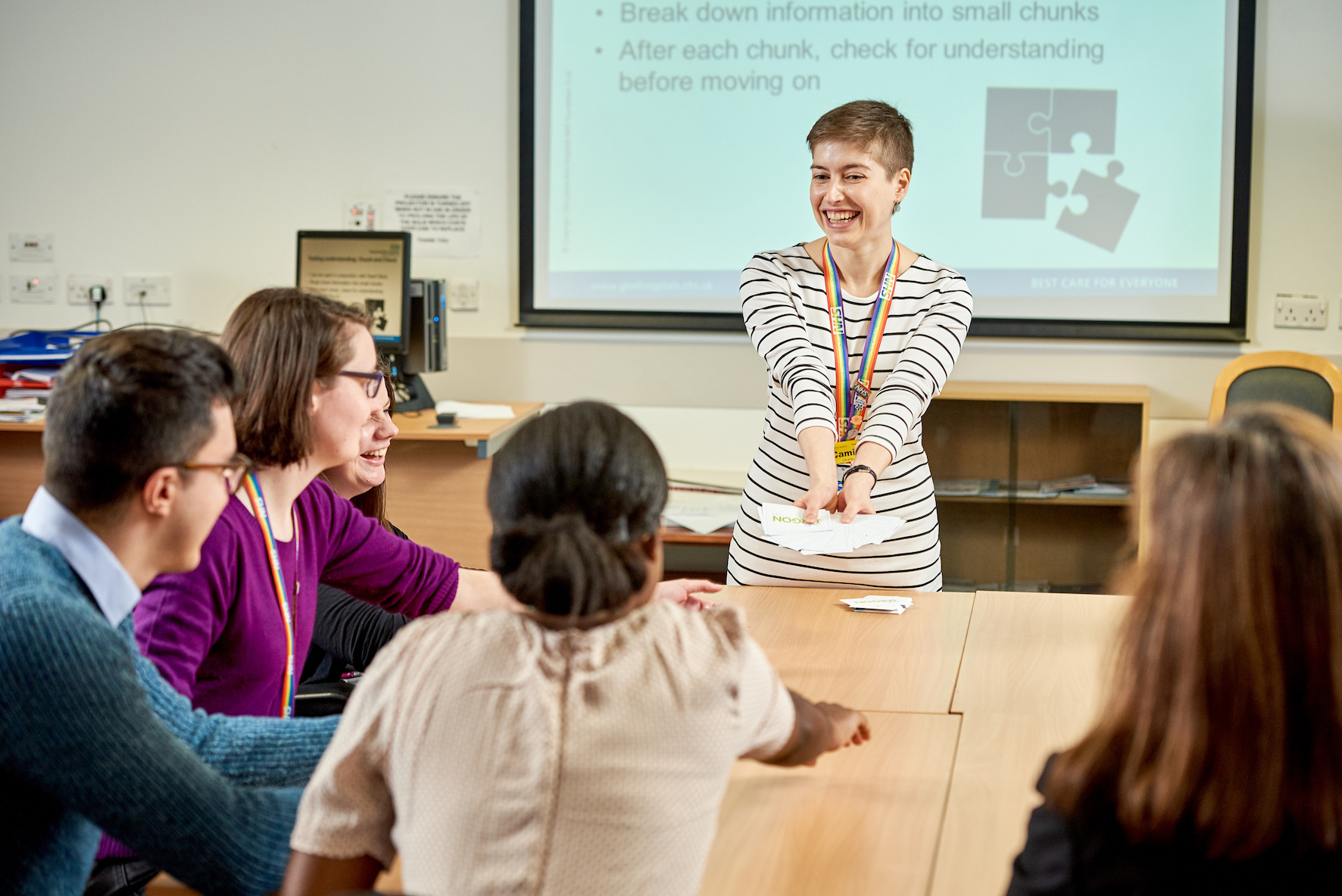
Going beyond Dr Google
Going beyond Dr Google is a hands-on training session aimed at anyone who would like to be able to give good information to patients, clients, or service users.
Tasks, course notes and presentation slides can be found in Downloads. Developed by Aubrey Keep Library, North East London NHS Foundation Trust.
Improving your health online
Learn My Way developed by the Good Things Foundation (formerly Tinder Foundation) is a website of free online courses for beginners, helping to develop digital skills to make the most of the online world.
Finding good quality health information on the Internet
The how to start your search guide is designed to help people understand and review published health research to decide how dependable and relevant a piece of research is; it gives patients a simple guide to appraising health information on the net, either by looking for quality standards or using the mnemonic, WWW (who, what, where).
It takes people through a series of questions to ask about specific types of health research, and helps users to understand what the answers to those questions say about the quality of the research they are reading.
The guide helps to find trustworthy health information online. It covers using established sites, checking web addresses and other relevant criteria.
Health information workbook
This workbook was initially designed to support a library staff training session on finding patient information.
It introduces a number of high quality websites, highlighting key features and concludes with a selection of “questions to explore” – worked examples of typical patient information enquiries.
Public library staff use the workbook to assist them with enquiries from the public. Please feel free to adapt with acknowledgements.
Making Every Contact Count (MECC) training
Knowledge and library services staff delivering health information training may find it useful to undertake the relevant MECC e-learning. In some Trusts, this is being made essential.
Accessible Information Standard training
A list of useful training resources, videos, presentations and webinars to help staff understand the need for accessible information and how to address users’ needs.
Contact the Knowledge for Healthcare team for any of these documents in an accessible format.
Page last reviewed: 23 August 2023
Next review due: 23 August 2024
Related information
-
Barriers and drivers game
The barriers and drivers game can be used to identify blockers and opportunities
-
Consumer health information slides
Slides and script from the consumer health information presentation
-
Developing local partnerships and networks
How to develop partnerships with other organisations to provide services to patients and the public
-
Fishbowl conversation
Fishbowls are useful for debating “hot topics” or sharing ideas
-
Fresh eyes exercise
An activity to help you to think like another person and rejuvenate current ways of working
-
Ice breakers
A selection of short ice breakers to help groups be more creative or think in different ways
-
Prioritisation matrix
The priority matrix exercise is a useful exercise to help you rank your ideas and opportunities
-
Regional case studies
Case studies about working with partners to deliver services to members of the public
-
Six Thinking Hats
This tool enables individuals or members of a group to explore an idea or topic from a variety of perspectives
-
Workshop evaluation form
Patient and public information workshop evaluation form